

US Designer Chondros – part 4
The topic of US designer Chondros is so extensive that many articles will appear in the coming months.
A central element will be the Morelia viridis breeders of the last 40 years as well as some of the most spectacular lines that have emerged with the enthusiasm of these people.
Lines that have also found their way into Europe and Germany and have been and continue to be promoted by well-known breeders.
Before the first part of this series begins, we would like to thank those people and institutions without whose support and permission this series would not have been possible.

Herpetoculture Magazine: https://herpetoculturenetwork.com/
If you are interested in buying: https://www.magcloud.com/brose/issue/1850727

The Herpetoculture Network: https://www.facebook.com/theherpetoculturenetwork/

Creating Mr. Blue A (Not So) Short History
I would like to thank Tim very much for the pictures provided and for the permission to publish them.

Mid-Atlantic Arboreals: https://www.facebook.com/midatlanticarboreals/

Vibrant Viridis, LLC: https://www.vibrantviridis.com/
The story of Mr. Blue - Part 4
A (not so) short story by Tim Morris
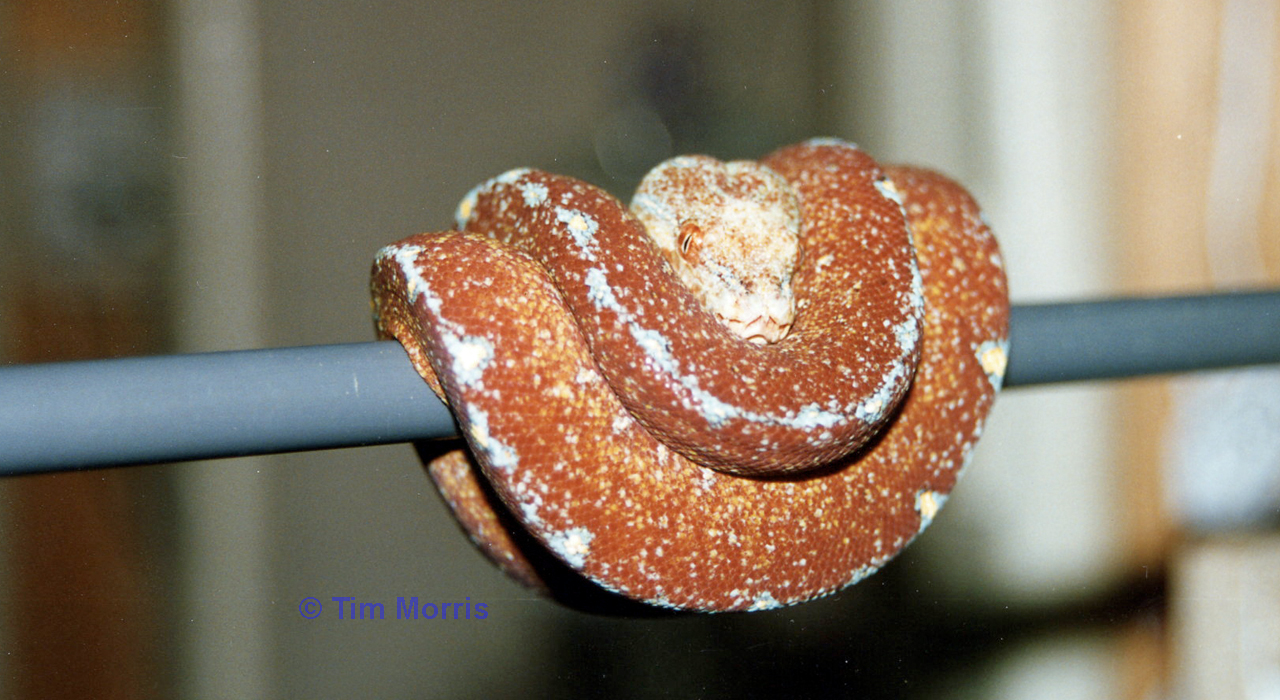
The Big Day
The day before the neonates were due to hatch, I noticed that the female reacted very attentively to the slightest disturbance.
Then came the day of hatching!
To this day, I count this day as one of the most exciting I have ever experienced. You take a look at the eggs and it's hard to believe, the first snout is visible.
What makes this day so impressive for me are two things. Firstly, because it was the first clutch to hatch in my care and secondly, because the mother had cared for the eggs.
I don't leave everything to chance. When the first babies have left their eggs, which takes about 36 hours, I remove the female.
To say I was excited about the whole thing would be a gross understatement. I can still remember the scream I let out when I came home from work that afternoon, peered into the nest box and discovered the first snouts!
Even if I repeat myself: I can only recommend to every Morelia viridis keeper to at least once leave the breeding business to the female and not to the incubator.
The result of this litter was 17 live babies from a total of 25 eggs. The other 8 were late-stage stillbirths - something that experienced Chondro breeders are used to.
The neonates were relocated to small rearing racks with a suitable ladder, which also contained a shallow water dish with a diameter of 10 cm.
Every Chondro breeder probably remembers the efforts and problems associated with feeding the first clutch of eggs ...
It was definitely a difficult time, and to be honest, the euphoria over Chondro's first litter began to fade as the weeks went by!
I remember getting most of them to eat (and also the excitement and sheer sense of achievement when the first baby had its first meal!) But there were still at least 5 neonates who vehemently refused to accept the food offered.
These are the ones that make you want to go into the terrarium room.
I contacted Trooper several times and asked for advice. His response was, "Remember, Tim, in the wild these snakes are reflex eaters that rely on wagging their tails to attract prey."
With this knowledge, I increased the agitation of these five food refusers, which resulted in two more food consumers.
Trooper had a special method, which is described in the original article. It didn't work on these neonates - and I'm kind of thankful for that, because it's how I came up with the chief. A little fluff is plucked from the neck area of a dead day-old chick and used to "feather" the thawed mouse. THAT works wonderfully.
The remaining stubborn neonates not only ate, but also did so with vigor and conviction.
After this success, I thought to myself: "Damn Tim, you should just do that from the start!"
I would like to end this section by saying that I also served frog and lizard puree before the chicks. Unsuccessfully, I would like to point out.
But the trick with the down is perfect: the frozen chicks are easy to get and masking the mouse as a chick is easy to do.
End Part 4
Click here for the original article: Creating Mr.Blue