The Nidovirus - Part 2
Nidovirus detection and transmission routes:
When detecting Nidovirus, a distinction must be made between sick and healthy animals.
Animals suffering from Nidovirus show secretions of ochre-coloured mucus from the mouth and nose.
This mucus not only looks disgusting, but also smells unpleasant due to high levels of bacteria.
The snakes lie apathetically on the ground, gasping for air and wasting away.
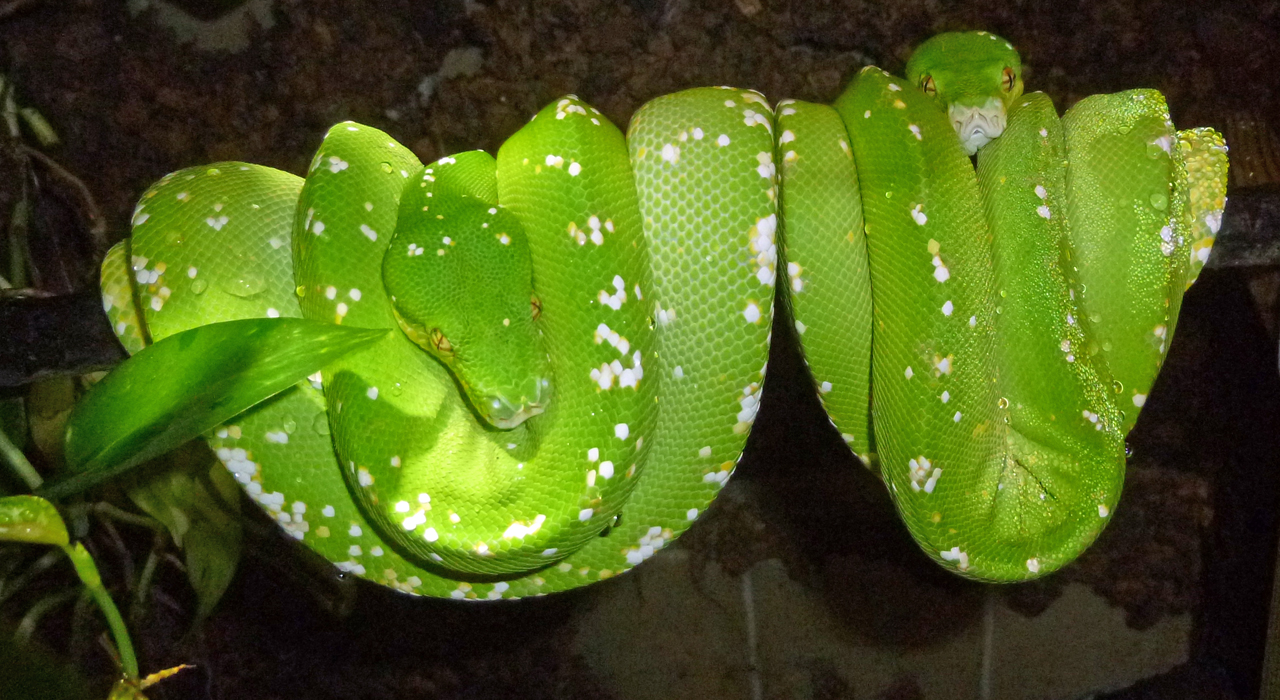
It should go without saying that Morelia viridis with the symptoms described should be examined immediately by a vet and euthanized if the findings are hopeless.
In my opinion, healthy and inconspicuous animals that are carriers of the Nidovirus represent the real challenge.
In general, Nidovirus can be detected using a throat swab, provided there is sufficient viral load in the throat.
The swab should be carried out by a vet who specializes in reptiles.
Of course, an experienced keeper can also do this.
The virus, which has a basic structure of 33,500 base pairs, is detected using PCR (polymerase chain reaction).
Today, PCR is used in a wide range of diagnostic applications and has become indispensable in the field of criminology and kinship research.
The latest publication on the detection of Nidovirus that I am aware of was published in 2020 by Dr. Silva Blahak and her team.
Dr. Silvia Blahak has made a name for herself in the field of reptile diagnostics and research into their diseases.
New Generation Sequencing (NGS) and RT-qPCR are used in this publication. They are more sensitive in detection due to adaptations to the virus.
Several strains of the Nidovirus were detected in infected snakes using these methods.
Like corona, there are also strains whose pathogenicity is higher than others.
Even if the test is not positive, this does not mean that the snake could not be a carrier of the Nidovirus.
As already mentioned, a certain amount of virus is required to obtain reliable evidence.
Periodical testing for the Nidovirus is therefore recommended.
If you are interested in this topic in detail, I have compiled an overview of interesting publications used here in a separate article:
Today, rapid infection is ruled out, as was initially feared. This is mainly due to the fact that we know that the Nidovirus does not spread through the air.
The transmission routes are:
- Body fluids
- smear infections
- mites
Finally, three laboratories are listed here in alphabetical order that have a test to detect the Nidovirus.