

Intestinal prolapse in Morelia viridis
Intestinal prolapse in Morelia viridis
All reptiles have a common body outlet for digestive, sexual and excretory organs, which is called the cloaca.
The cloaca is divided into three parts.
The coprodaeum is the end of the digestive tract.
It collects the products from the intestines.
This is followed by the urodaeum which collects the contents of the excretory ducts of the urogenital tract.
The proctodaeum is in front of the cloacal opening.
It contains the products from the intestines, urinary tract and sexual tract.
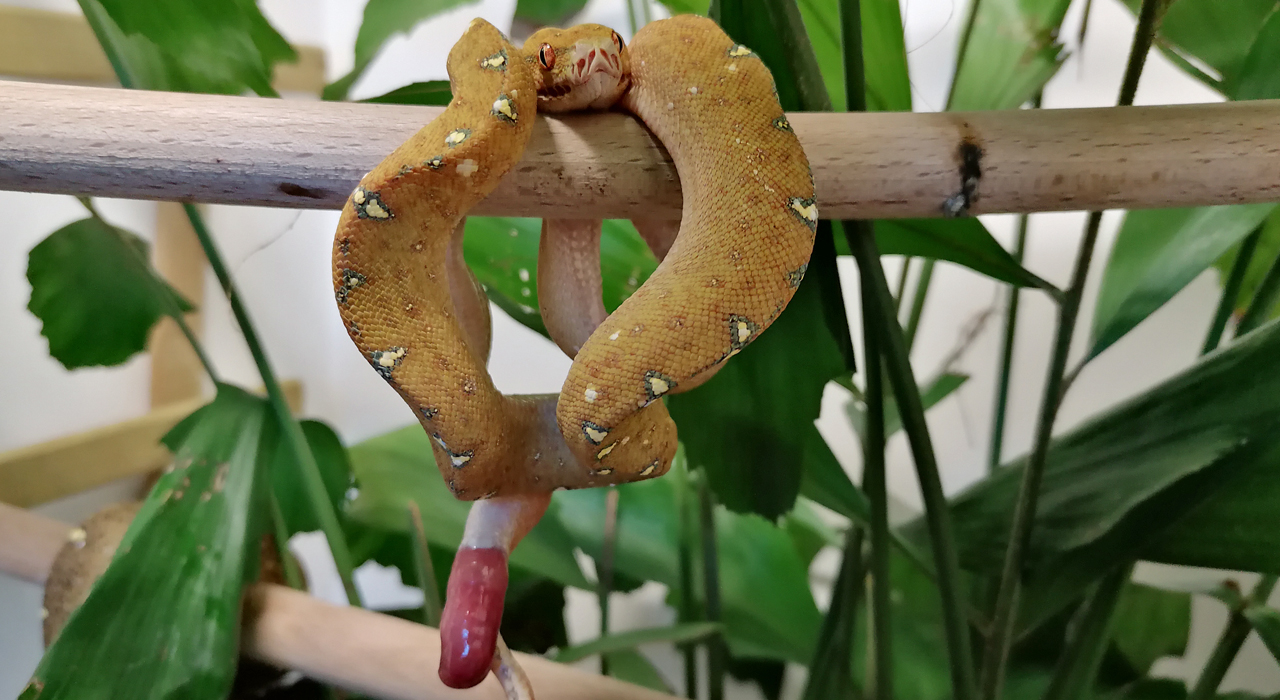
Depending on which part of the cloaca is pushed out of the body, the only option is a quick operation.
For an operation to be successful, the intestinal tissue must be intact.
This is achieved by keeping the tissue:
o is kept moist
o Is cleaned
o Is not necrotic
Neonates cannot be operated on.
The only option for neonates is retraction, provided it is the proctodaeum.
This part of the bowel is short and allows the bowel to be returned to the body with the aid of a rounded probing needle.
There are many causes of bowel prolapse:
- Strong squeezing movements, e.g. due to constipation or diarrhoea
- Strong pushing movements due to crystalline uric acid
- Heavy parasite infestation, for example by flagellates or worms
- Connective tissue or muscle weakness
- Nerve paralysis (for example due to a tumour)
- Lack of exercise due to excessive feeding or too small terrariums
- Stress due to force-feeding
- Ingestion of too large indigestible foreign bodies
- Suffered one or even several intestinal prolapses as a neonate
- Cigar back
Other possibilities are discussed in various forums, based on the following observations:
o Feeding baby rats without fur because they are said to contain too little calcium but large amounts of protein (metabolic bone disease)
o Feeding animals that are too large
o Feeding too frequently
o Too dry environment
o Temperatures of > 30 °C because the snakes then digest the prey too quickly
o the diameter of the lying branch is too small
These parameters cause one thing above all: diarrhoea.
This in turn leads to frequent defecation.
During defecation, the intestine is distended.
During diarrhoea, the bowel remains outside the body for longer and is dragged over objects.
This causes irritation of the bowel.
This swells and can no longer be retracted.
Indigestible particles that cannot leave the intestine also cause this effect.
These videos show how a distended bowel is massaged back into the body:
https://www.youtube.com/watch?v=P3oydjhiRTU
https://www.youtube.com/watch?v=TMz-WhIh4Ck
Once the intestine has been successfully returned, the animal should initially not be offered any food.
Neonates can be returned to the feeding interval after 14 days, adult animals after 4 weeks.
The more often a prolapse occurs, the more intestine leaves the body.
The result is often euthanasia.
Neonates who have reached the age of 4 months and have been spared intestinal prolapse up to that point no longer suffer from it.